
Enjoy a full years subscription of Healthy Revelations and discover life-changing health secrets you won't find anywhere else.
- $240 Yearly Value

- How To Lose Weight Fast
- Healthy Eating
- Stress Relief
- Disease Prevention
- Doctor Recommendations
- Seasonal Health Tips
- And More...
Nutrition Articles
Understanding Fats
Good fats? Bad fats? You will not find these terms on food labels. Instead you will see words like polyunsaturated and trans fats. This article will give you a brief explanation of the four types of fats (saturated, monounsaturated, polyunsaturated and trans fats) and how they affect your body.

Saturated Fats
Saturated fats are fats that stay solid at room temperature, such as lard, coconut oil and cow butter. Saturated fats are considered “bad fats” because they raise your bad cholesterol level, thereby raising your total cholesterol level. People whose diet consists of many foods high in saturated fats typically are at a higher risk of heart attack, stroke and cardiovascular disease.
Monounsaturated Fats
Monounsaturated fats have a lower melting temperature than saturated fats, which means that they do not stay solid at room temperature. These types of fats can be found in: peanut oil, olive oil, nuts and avocados.
Polyunsaturated Fats
Polyunsaturated fats are fats that can stay liquid even at lower temperatures, such as corn oil and sunflower oil. Polyunsaturated fats are also found in soybeans, fish, fish oil and in grain products.
Dieticians consider polyunsaturated fats the “good fats” as they lower cholesterol and they help prevent cardiovascular disease by lowering the amount of fat in the blood.
Trans Fats
Trans fats are man-made fats that are created during the hydrogenation process. These types of fats are unnatural and toxic to your body. Trans fats are abundant in packaged and processed foods.
Dieticians consider trans fats the “bad fats” as they can cause cancer, diabetes, obesity, birth defects, low birth weight babies, and sterility.
Avoid Packing on the Pounds while on Vacation
Sure everyone loves vacation, but no one loves coming back from vacation and stepping on the scale. Instead follow these steps to avoid putting on those extra pounds.

- Book a hotel or condo with a kitchen, a mini-kitchen, or at least a small refrigerator. If you have a kitchen in your place you will be prone to eat a few meals in your place, which will be healthier than consistently eating out during your entire vacation. You can always choose to eat your breakfast and lunch in your room, then have your dinner out so that you can still enjoy some delicious vacation food.
- Do some research about the restaurants and food options in the area where you are vacationing. If you know what restaurants and resorts offer healthier choices than others, then you can plan your meals out and not just choose the closest (and sometimes unhealthier) place when it is time to eat.
- Pack some resistance bands in your suitcase for some easy exercises on the go. You can easily find some great resistance band workouts online and do them in the privacy of your room.
- Change up your playlist. If you are working out while on vacation, choose an entirely different playlist or a different audio book to switch things up while you are away from your normal routine. This way you can still relax like you are on vacation, but still get in your workout, even if the only different thing is what's coming through your headphones.
- Don't forget your sneakers, and you can do so by wearing them when you travel. Most people who don't exercise on vacation say it's because they forgot to pack their tennis shoes. If you are wearing your tennis shoes when you leave your house then you can't use that as an excuse.
- Work out first thing in the morning. One reason is that if you get up early and workout the rest of the day you are free to do whatever you please. Another reason is that you won't affect anyone else's schedule that may be on vacation with you if you get up first thing and get your daily workout in. You don't have to try and fit in a full workout. Even 20 minutes of jogging, walking or doing yoga is better than doing nothing.
Spotlight on: Sweet Potatoes
- Sweet potatoes are an excellent source of vitamin A in the form of beta carotene and vitamin C.
- The nutrients in sweet potatoes are also anti-inflammatory, which means that besides being great tasting, sweet potatoes can help reduce the severity of conditions like asthma, osteoarthritis, and rheumatoid arthritis.
- In addition, sweet potatoes are a good source of vitamin B6.

Recipe: Golden Sweet Potato Brownies
1 cup butter
1 cup packed brown sugar
1 cup white sugar
4 eggs
2 teaspoons vanilla extract
1 ½ cups all-purpose flour
1 teaspoon baking powder
½ teaspoon salt
2 cups peeled and finely shredded sweet potatoes
1 cup powdered sugar
2 tablespoons butter or margarine
2 tablespoons milk
Preheat the oven to 350. Grease a 9x13 inch baking dish. In a large bowl, cream together the butter, brown sugar, and white sugar until smooth. Beat in the eggs one at a time, then stir in the vanilla. Combine the flour, baking powder, and salt; stir into the batter just until blended. Fold in the shredded yam. Spread the batter evenly in the greased baking dish. Bake for 30 minutes. Mix together the confectioners' sugar, butter and milk until smooth. Spread over the brownies while they are still warm.
Recipe: Spicy Baked Sweet Potato Fries
6 sweet potatoes cut into French fries
2 tablespoons canola oil
3 tablespoons taco seasoning mix
¼ teaspoon cayenne pepper
Preheat the oven to 425 degrees.
In a plastic bag, combine the sweet potatoes, canola oil, taco seasoning, and cayenne pepper. Close and shake the bag until the fries are evenly coated. Spread the fries out in a single layer on two large baking sheets.
Bake for 30 minutes, or until crispy and brown on one side. Turn the fries over using a spatula, and cook for another 30 minutes, or until they are all crispy on the outside and tender inside. Thinner fries may not take as long.
Non-Dairy Foods that Build Bone Strength
We all know that calcium builds strong bones, but it also ensures that your muscles, nerves and cells all work properly.
As adults, we need approximately 1,000 milligrams of calcium a day : or the equivalent of more than three 8 oz. glasses of milk a day. But if you don't do dairy, you are still able to get your daily dose of calcium with these calcium-rich foods.

Broccoli has a calcium content of 86 milligrams in just two cups of raw broccoli. It also contains nearly twice the vitamin C than an orange.
Collard greens contain 268 milligrams of calcium per one cup cooked. It is also loaded with three days' worth of vitamin A.
Kale has a calcium content of 101 milligrams in one cup of raw, chopped kale. Kale also provides a day's worth of vitamin C and twice the recommended daily intake of vitamin A.
Edamame contains 98 milligrams of calcium in one cup cooked. It is also one of the few non-animal foods that is a complete protein : meaning it contains all nine essential amino acids. And 8 grams of fiber per serving isn't too shabby, either.
Figs have a calcium content of 121 milligrams in ½ cup dried figs. Figs also supply you with magnesium, potassium and fiber.
Oranges contain 74 milligrams of calcium in one large orange and 27 milligrams in one cup of orange juice. Orange are also great sources of vitamin C, they are full of antioxidants and are low in calories.
Sardines have a calcium content of 351 milligrams in a 3.75 oz. can. While some people may fear sardines simply on looks alone, they are really quite tasty and are an amazing source of vitamin B12 and vitamin D.
Spotlight on: Spinach
- Researchers have found at least 13 different flavonoid compounds in spinach that have been known to act as antioxidants and as anti-cancer agents, combating specific cancers like ovarian and prostate cancer.
- The vitamin K in spinach provides 200% of the daily value in fresh spinach and nearly 1000% of the daily value in boiled spinach.
- Spinach is an excellent source of vitamin C and vitamin A, folate and magnesium.
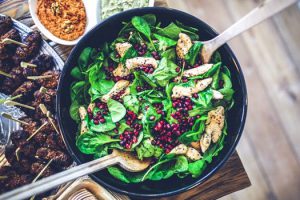
Recipe: Spinach Lasagna
- 2 egg whites
- 26 oz of prepared spaghetti sauce
- 24 oz of ricotta cheese
- 10 oz of Lasagna noodles, cooked
- 10 oz of frozen spinach, thawed and chopped, then squeezed dry
- 2 cups of mozzarella cheese, grated, reserve ½ cup
- ¾ cup of Parmesan cheese, grated and divided, reserve 2 tablespoons
- ½ teaspoon of salt
- ½ teaspoon of black pepper
- Olive oil
Preheat oven to 350°. Prepare a 9-x13-in. baking dish for lasagna. Prepare lasagna noodles as directed on the package, then rinse and drain. Combine parmesan cheese, ricotta cheeses with the egg whites, salt and pepper in a large mixing bowl. Pour ¼ cup of spaghetti sauce in the bottom of the baking dish and spread it out using a spatula. Cover the sauce with a single layer of lasagna noodles. Spread about half the cheese mixture over the noodles, and then cover with about half of the spinach and shredded mozzarella cheese. Finish this layer with half of the remaining spaghetti sauce. Alternate layers and bake for 30 minutes.
Recipe: Wilted Spinach Salad
- 10 to 12 ounces spinach, washed and torn into pieces
- ¼ cup minced red onion
- 5 to 6 radishes, thinly sliced
- 2 hard-cooked eggs, 1 chopped and 1 sliced
- 2 to 4 slices bacon
- 1 to 1 ½ tablespoons bacon drippings
- 1 ½ tablespoons sugar
- 3 tablespoons vinegar
- 1 tablespoon water
- ½ teaspoon salt
- 1/8 teaspoon pepper
Place prepared spinach in a large bowl. Add onions and radishes. Refrigerate, tightly covered. Fry or microwave bacon until crisp; remove to paper towel and set aside. In a small jar or measuring cup combine drippings with sugar, vinegar, water, salt and pepper. Refrigerate all ingredients until just before serving. When ready to serve, microwave the dressing on high for 30 to 45 seconds, or until mixture boils. Toss the chopped egg with the greens then pour the hot dressing over greens mixture; toss again lightly with crumbled bacon.
Enjoy a full years subscription of Healthy Revelations and discover life-changing health secrets you won't find anywhere else.
- $240 Yearly Value
- How To Lose Weight Fast
- Healthy Eating
- Stress Relief
- Disease Prevention
- Doctor Recommendations
- Seasonal Health Tips
- And More...